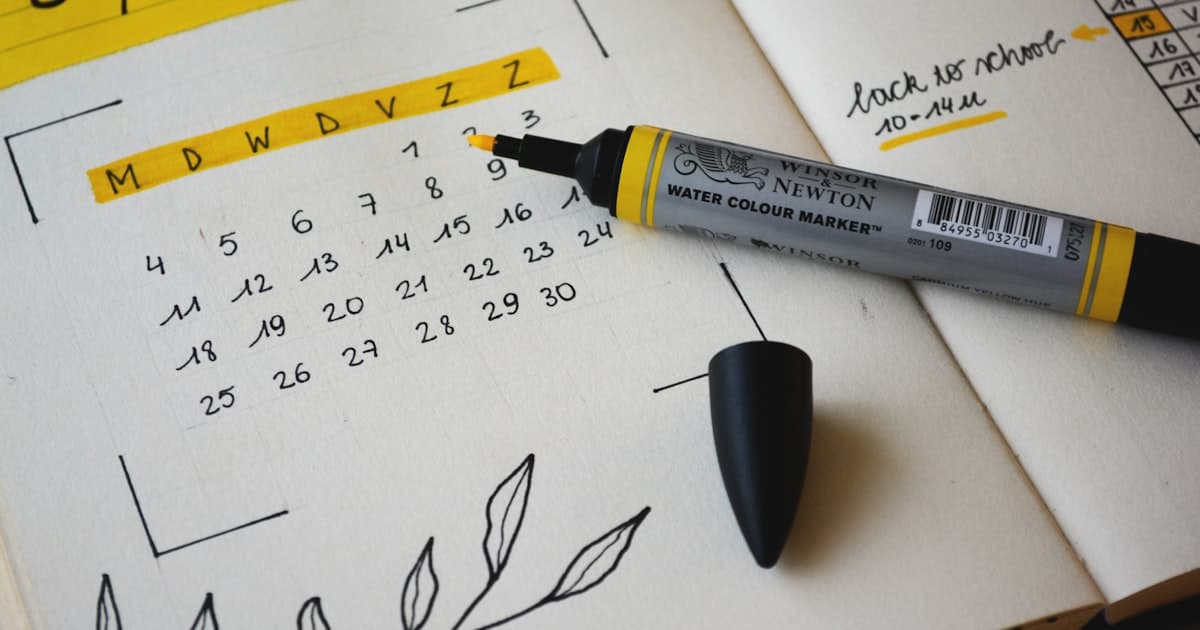
When the clocks go back, your body clock still runs on the old hour for a few days. Ease in by moving bedtime and wake-up 15 minutes a day, tie habits to events such as breakfast rather than to the clock, and get daylight early. Plan the first Monday so a rough morning does not break a streak.
What actually changes when the clocks go back
In the UK the clocks go back one hour at 2 a.m. on the last Sunday in October, which in 2026 is October 25. In most of the United States daylight saving time ends at 2 a.m. local time on the first Sunday in November, which in 2026 is November 1. Hawaii and most of Arizona do not change their clocks. The change gives you an extra hour on that Sunday, but it also shifts everything tied to the clock. Your alarm, your commute, your dinner and the time the sun goes down all move by an hour while your body does not. For a few days it can feel as if you are waking up an hour late or getting tired an hour early.
Why habits tied to the clock wobble
Most habit plans say things like I run at 6:30 a.m. or I read at 10 p.m. After the change, that 6:30 is dark and feels like 7:30 to your body, and 10 p.m. feels like 11. The habit has not changed, but the cue has. The fix is to anchor habits to events rather than clock times where you can: after I pour my coffee, after I get home, after I brush my teeth. An event moves with you through the time change. A clock time forces you to move the habit by hand.
A three-night plan to ease the shift
You do not need to change anything dramatic. The idea is to nudge your schedule toward the new clock in small steps so Sunday is less of a jolt. The example below uses a person who usually goes to bed at 11 p.m. and wakes at 7 a.m. Use your own times. Three nights before the change, go to bed 15 minutes later than usual and set the alarm 15 minutes later. Do the same the next night, and the next: by the third night you are going to bed at 11:45 p.m. and waking at 7:45 a.m. by the old clock. In this plan the three nights are Wednesday, Thursday and Friday. Saturday night is the night of the change: go to bed at midnight by the clock you see, another 15 minutes later. The clocks go back at 2 a.m., so that midnight was 11 p.m. on the new time, your usual bedtime. Set the alarm for your normal 7 a.m. on the new clock. To your body it feels like 8 a.m., one more small step rather than a full hour.
Small adjustments for common habits
Morning walk: instead of walking at 6:30 a.m. by the clock, walk after breakfast, or keep 6:30 a.m. and add a bright coat and a headlamp. Evening reading: instead of reading at 10 p.m., read after you brush your teeth. Water at lunch: instead of a glass at noon, drink a glass when you sit down to eat. Workout: instead of 5:30 p.m. sharp, go before it gets dark or move it indoors. Bedtime: instead of 11 p.m. on the dot, go after the evening shower, whatever the clock says.
Use daylight on purpose
After the clocks go back, the mornings are lighter for a while and the evenings darker. Getting outside soon after you wake, even for a few minutes at a window, balances the early dusk by giving your day a clear start. This is a scheduling tip rather than medical advice; if you struggle with sleep over weeks, talk to a doctor. In the evening, turn lights down and keep screens away from the pillow for the last half hour. The goal is a consistent wind-down, not a perfect one.
Protect your streaks on the first Monday
The first workday after the change is where a streak is most likely to slip. Decide in advance what counts as a minimum version: a ten-minute walk, one page, a glass of water. Writing it down on Sunday means you do not have to decide on a tired Monday. If you do miss a day, follow the never-miss-twice rule. A single missed day did little to later habit formation in the 2010 study by Lally and colleagues, while many misses lowered it, so the aim is to be back the next day with the smaller version.
A one-page checklist
Before the weekend: pick one habit to move to an event anchor. Write the minimum version of every habit on a card. Wednesday through Friday nights: go to bed 15 minutes later each night and set the alarm 15 minutes later the next morning. Saturday night: go to bed at midnight by the old clock, which is 11 p.m. on the new time. On Sunday: change the clocks that do not update automatically, such as the oven, the car and wall clocks. Get outside in daylight. On Monday: do the minimum version first thing and mark the chain. Go to bed at your usual time on the new clock.