

Building a new habit isn't the test of character most people assume it is. People don't fail at exercising, reading, or waking up early because they lack willpower — they fail because the habit was never designed to survive a normal, busy, tired week. The good news: habit formation is a learnable skill. Get the structure right and most of the "just try harder" problem quietly disappears. This is the complete guide to how to build a new habit that actually sticks.
What a habit actually is
At the core of every habit is a simple loop: cue → routine → reward. A cue (your morning coffee, a phone buzz, arriving home) triggers your brain; the routine is the behavior you perform; the reward is the feeling that tells your brain "remember this, do it again." Repeat the loop enough times and the behavior becomes automatic — you stop deciding and it just happens.
Building a new habit is really about designing that loop on purpose: pick a clear cue, shrink the routine as much as you can, and give yourself a visible sense of accomplishment when it's done. That last part is exactly where habit tracking earns its keep.
Start absurdly small
The single most reliable move is to shrink the habit until it's almost embarrassing. This is often called the "two-minute rule" or the minimum viable habit. Instead of "exercise 30 minutes a day," put on your workout clothes. Instead of "finish a book," read one page. Small enough that you can do it on your worst day, when you're exhausted and it's already past midnight.
It feels like cheating. It isn't. The point of the early days is not to do a lot — it's to prove to yourself, every single day, that you are a person who does this. Once the identity is in place, the volume grows on its own. Almost nobody puts on their shoes and does nothing; the hard part was starting.
Anchor the new habit to an existing routine
A behavior needs a trigger to hang on. A free-floating intention to "be healthier" isn't attached to anything. Instead, bolt the new habit onto something you already do automatically — this is called habit stacking:
- After I pour my morning coffee, I stretch for two minutes.
- After I brush my teeth, I drink a glass of water.
- After I finish dinner, I read one page.
The word "after" is doing the heavy lifting. You already make coffee and brush your teeth without thinking. Chaining a new behavior onto an old one borrows that ready-made automaticity instead of relying on you to remember.
Make it obvious and easy
Environment beats intention. The easier and more visible a behavior is, the more you'll do it. Put the book on your pillow, the water bottle on your desk, the running shoes by the door. Just as importantly, reduce friction: leave the phone in another room, lay out your clothes the night before. The goal is to make the right behavior the path of least resistance.
Don't break the chain: the motivational engine
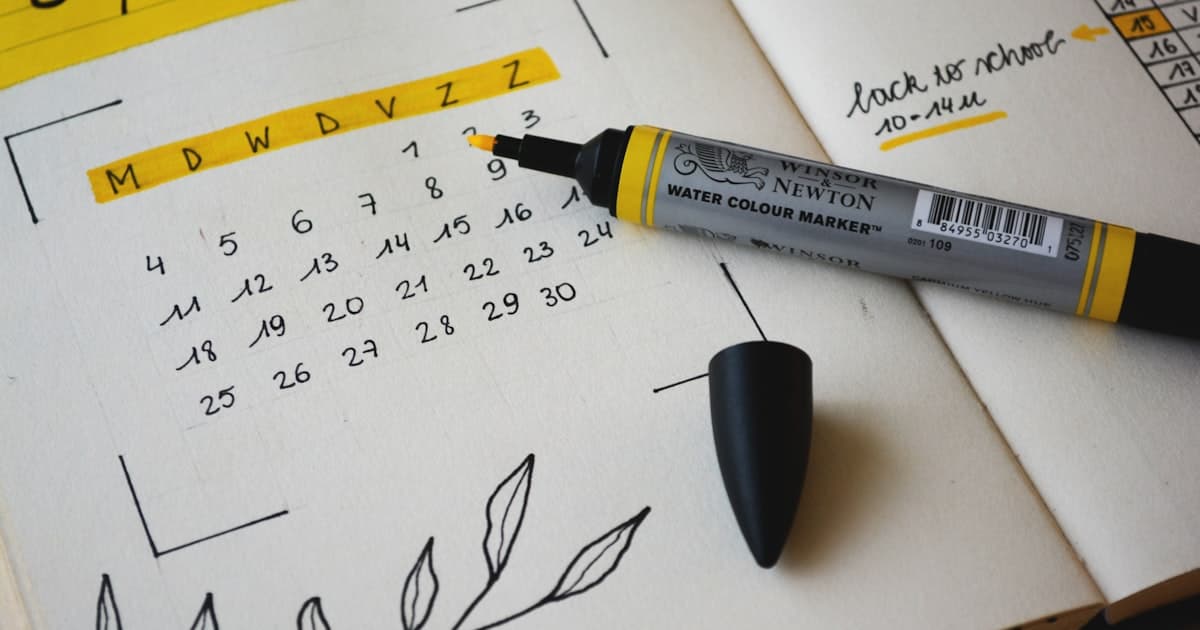
Here's the method that gives Daychain its name. The idea is often attributed to comedian Jerry Seinfeld: put a big calendar on the wall, and for every day you do the work, mark a large X. After a few days you have a chain. After a few weeks you have a chain you don't want to break.
The chain works because it flips your motivation. You stop asking "do I feel like it today?" and start protecting a streak you've already built.
Every day you show up, a link is forged. The visible, growing chain becomes its own reason to keep going — and the longer it gets, the more it protects itself. It's one of the strongest psychological levers in all of habit formation.
Consistency beats intensity
The biggest beginner mistake is confusing effort with consistency. Someone who trains three hours once looks impressive next to someone who trains ten minutes every day — and loses. The brain learns through repetition, not heroic one-off performances. This is also why you should treat figures like "21 days" or "66 days" as popular claims rather than hard facts. The truth is that how long a behavior takes to automate varies by person and habit. What matters isn't the number of days on the calendar — it's the number of reps you stack without breaking.
Never miss twice
You will miss a day — a sick kid, a late flight, a brutal deadline. That's normal. A habit is defined not by whether you slip but by what you do next. The rule is simple: never miss twice. Missing one day is an accident; missing two in a row is the start of a new pattern.
A good system doesn't leave this forgiveness to chance — it builds it in on purpose. A planned skip protects an honest day off without breaking the streak. A repair lets you mend a missed day after the fact. That way a single slip doesn't wipe out weeks of work.
Track it: measure the invisible
If progress is invisible, a good week and a bad week feel identical, and quitting gets easy. A visible chain solves that: every completed day becomes concrete evidence, and your current streak and longest streak sit right in front of you. What gets measured grows.
Common mistakes
- Starting too big. That inspired first day misleads you into an unsustainable target that collapses by day three.
- Too many habits at once. Willpower is a limited budget. Focus on one behavior until it settles before adding another.
- All-or-nothing thinking. The "if I can't be perfect, why bother" trap. Imperfect but consistent always beats perfect but fragile.
How Daychain implements all of this
Daychain is a habit tracker built to put these principles into practice directly. It offers four task types for different behaviors: binary (did it / didn't), count (e.g. 20 push-ups a day), duration (e.g. 10 minutes of meditation), and avoid (e.g. no cigarettes). Each behavior gets tracked the way that fits it.
Three chain modes adapt to different goals: strict for every single day, balanced for a flexible target, and flexible for a set number of times per week. So an exercise goal with rest days and a reading goal for every day can live in the same system.
Engineered forgiveness is built right in: planned skips and repairs keep an honest off-day from breaking your chain. A broken day isn't shamed in red; it's marked honestly but calmly, and the comeback is celebrated. And at the center of it all sits that visible, forged chain.
This guide lays out the general framework of habit-building. For specific goals we have deeper, step-by-step guides: reading, exercising regularly, drinking more water, meditation, or quitting smoking — each has its own detailed walkthrough. But whichever you start with, the formula is the same: start small, anchor it to a routine, make it obvious and easy, and don't break the chain.