

Why is building a new habit so hard? The problem usually isn't intention — we genuinely want to meditate each morning, floss, or drink a glass of water. The problem is that the new behavior has nothing to hold onto. It floats, unattached, as something you have to remember, and on a busy day it's the first thing to slip.
Habit stacking closes exactly that gap. Instead of building a new habit from scratch, you bolt it onto one that is already firmly in place.
The formula: "After I [current habit], I will [new habit]"
At the heart of habit stacking sits a single sentence:
After I [current habit], I will [new habit].
Examples:
- After I pour my morning coffee, I will stretch for three minutes.
- After I brush my teeth, I will drink a glass of water.
- After I shut my laptop, I will tidy my desk.
- After I put the dinner dishes away, I will lay out tomorrow's clothes.
The power is in the specificity. "I'll drink more water" is a wish; "after I brush my teeth, I'll drink a glass of water" is a plan. It names what, when, and immediately after what. Vagueness is exactly where habits quietly die.
Why anchoring to an existing cue works
Your brain already runs dozens of automatic behaviors every day: making coffee, brushing your teeth, plugging in your phone. You don't have to remember them — they simply happen. Habit stacking borrows that ready-made automaticity.
When you place a new behavior right after a deeply worn one, the old habit becomes a cue for the new one. You no longer think "I should remember to drink water today"; brushing your teeth now summons it. The first link in the chain pulls the next one along.
The best anchor is a behavior that happens consistently, every day, in the same order. That's why morning routines, meals, and commutes make excellent anchor points — they repeat reliably, whether you're motivated or not.
Start small — absurdly small
The most common mistake in stacking is making the new habit too big. A stack like "after coffee, I'll read for an hour" collapses the first tired day. Instead, shrink the new link until you could do it on your worst day: one page, one stretch, a single deep breath.
The early goal isn't results — it's forming the link, so your brain learns the "coffee → reading" pattern. The amount grows on its own later. The hard part was always starting, and the cue now handles that for you.
Stacking several small habits in sequence
Once the first link is solid, you can chain a few small behaviors onto the same anchor, one after another. This is sometimes called habit chaining — each stack becomes the cue for the next:
- After I pour my coffee, I drink a glass of water.
- After the water, I stretch for three minutes.
- After stretching, I write down the day's three priorities.
Instead of scattered good intentions, you get one flowing morning ritual. But heed the warning: don't try to build the whole chain on day one. Add the links one at a time. Piling a new behavior on before the previous one is automatic makes the stack unstable, and the whole thing topples at once.
Don't Break the Chain makes every stack visible and forgiving
The hidden enemy of stacking is invisibility. A good week and a bad week feel identical in your memory, so you never really know whether the stack is taking hold. This is where the don't-break-the-chain method earns its place.
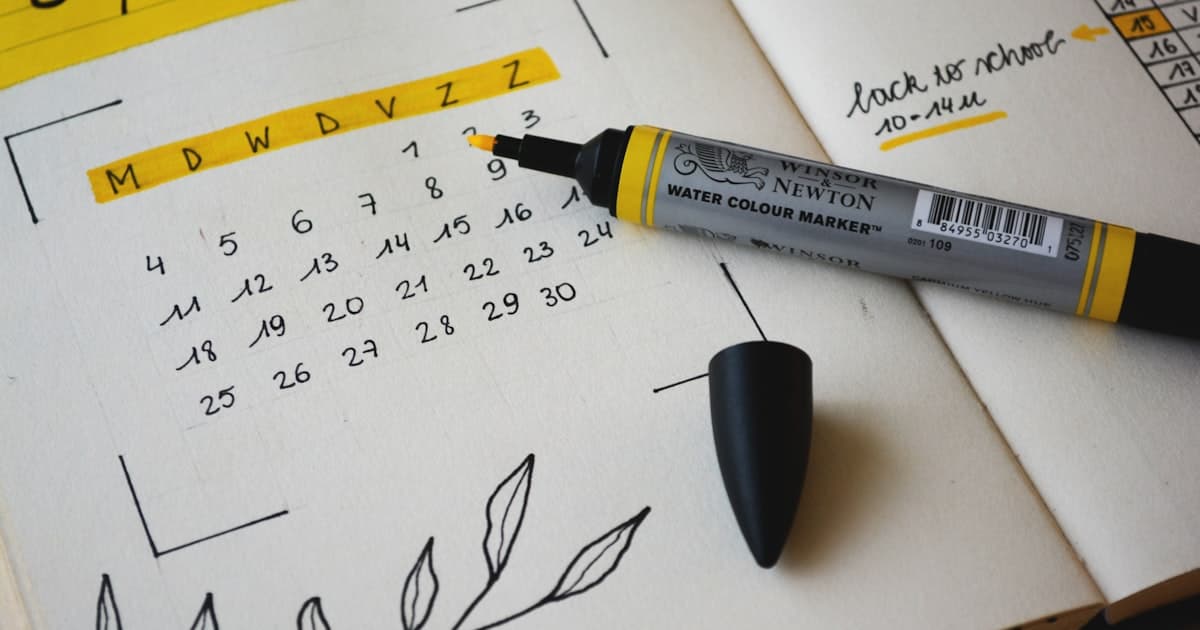
Add each stacked habit as its own task. Every time you complete it, a link is forged and the chain grows longer. This is the method often attributed to comedian Jerry Seinfeld: mark a big X for every day you do the work, and after a few weeks you have a chain you don't want to break.
The visible chain flips your motivation. You stop asking "do I feel like it today?" and start protecting a streak you've already built. And when life intervenes — which it will — a flexible mode and weekly skip credits protect an honest off-day without shame. Missing once doesn't shatter the chain; the real danger is missing twice in a row.
Start today
Write down three daily habits you already do without thinking: coffee, brushing your teeth, coming home from work. Then pick one absurdly small new behavior to attach to each. Today, do just one of them, track it as a task in Daychain, and forge the first link. The rest of the stack will rise on its own, on top of that first solid connection.