

Most people don't fail at reading because they can't read. They fail because the habit was never designed to survive a normal, busy, tired week. A reading habit that sticks isn't about motivation or discipline — it's about making the behavior so small, so anchored, and so visible that skipping it feels stranger than doing it.
Here's how to build one that lasts.
Why reading habits break (and it isn't willpower)
The usual story is that we "just need to be more disciplined." That's rarely the real issue. Reading habits collapse for structural reasons:
- The target is too big ("read 30 pages a night"), so a tired evening becomes an all-or-nothing failure.
- There's no fixed trigger, so reading competes with every other thing you could do.
- Progress is invisible, so a good week and a bad week feel exactly the same.
Fix the structure and the willpower problem mostly disappears.
Start absurdly small
The single most reliable move is to shrink the habit until it's almost embarrassing. One page. One paragraph. Five minutes. Small enough that you can do it on your worst day, when you're exhausted and it's already past midnight.
This feels like cheating. It isn't. The point of the early days is not to read a lot — it's to prove to yourself, every single day, that you are a person who reads. Once that identity is in place, the page count takes care of itself. Almost nobody reads exactly one page; the hard part was opening the book.
Anchor reading to something you already do
A habit needs a trigger it can hang on. Instead of "read more," bolt reading onto an existing, automatic routine:
- After I pour my morning coffee, I read one page.
- After I get into bed, I read until my eyes get heavy.
- After I finish dinner, I read for five minutes before touching my phone.
The word "after" is doing the heavy lifting. You already make coffee and get into bed without thinking. Chaining a new behavior to an old one borrows that automaticity instead of relying on you to remember.
Don't break the chain
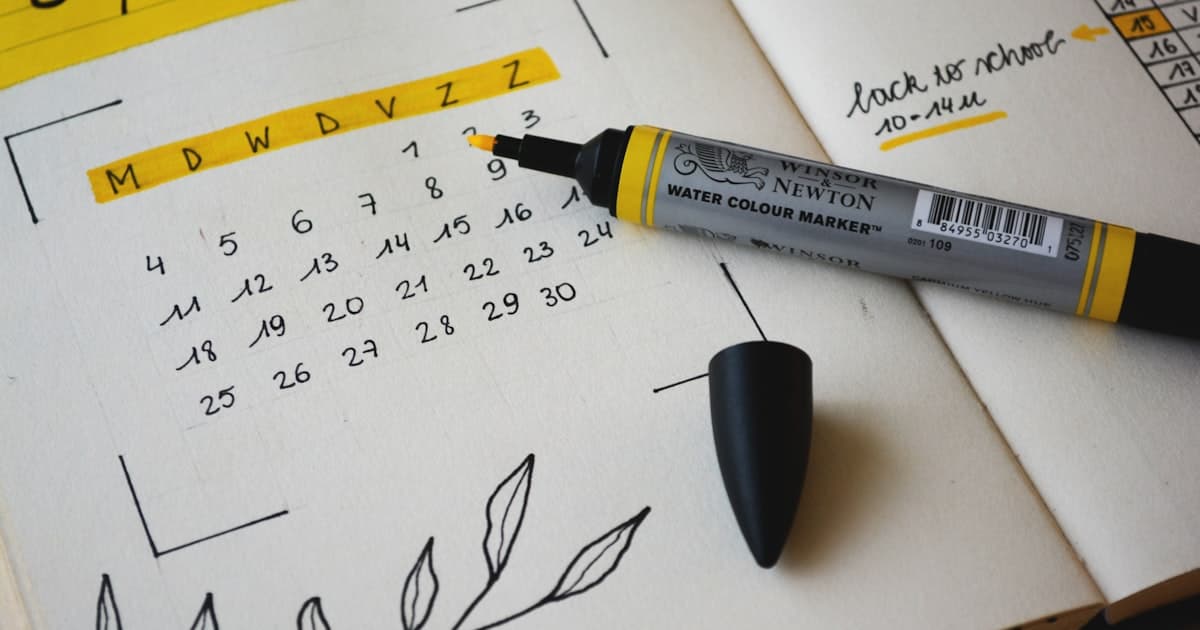
This is the method that gives Daychain its name. The idea is often attributed to comedian Jerry Seinfeld: put a big calendar on the wall, and for every day you do the work, mark a large X. After a few days you have a chain. After a few weeks you have a chain you don't want to break.
The chain works because it flips your motivation. You stop asking "do I feel like reading tonight?" and start protecting a streak you've already built.
Every day you read, the link is forged. The visible, growing chain becomes its own reason to keep going — and the longer it gets, the more it protects itself.
Make the book impossible to ignore
Environment beats intention. If the book lives on a shelf across the room, you'll forget it. If it's on your pillow, on the kitchen table, in your bag, you'll read it.
- Leave the book physically in the path of your trigger.
- Keep a second book where you actually get stuck waiting — a commute, a queue, a waiting room.
- Remove the competition: put the phone in another room during your reading window.
What to do when you miss a day
You will miss a day. A sick kid, a late flight, a brutal deadline. The habit isn't defined by whether you slip — it's defined by what you do next.
The rule that matters: never miss twice. One missed day is an accident; two in a row is the beginning of a new (non-reading) pattern. So the day after a miss, read a single page. That's it. Protect the chain, don't try to "make up" the lost session — punishing yourself with a huge catch-up read only makes tomorrow feel worse.
A good system builds this forgiveness in on purpose, so an honest off-day doesn't wipe out weeks of work.
A simple 30-day starter plan
- Days 1–7: Read one page a day, right after a fixed daily trigger. That's the entire goal. Mark each day.
- Days 8–21: Keep the same trigger, but let the sessions grow naturally to wherever they want to go. Don't force it.
- Days 22–30: Notice the chain. You now have three weeks of links. The habit is no longer a decision you make each night — it's just what you do.
By day 30 you won't be trying to read. You'll be a reader who happens to be tracking a chain — and reaching for the book will feel less like effort and more like coming home.